
A strong business card design starts with choosing the right paper stock. Paper affects how a card looks, feels, and performs. It also shapes how people remember your brand after a business meeting.
In the vibrant and competitive landscape of the UAE, where businesses constantly strive for excellence and visibility, AL IZRA ADVERTISING GIFT TRADING L.L.C stands out as a beacon of quality, innovation, and customer-focused service. With a deep understanding of market dynamics and a passion for visual storytelling, we help brands shine in a cluttered marketplace.
At AL IZRA ADVERTISING GIFT TRADING L.L.C, we are not just a signage manufacturing company; we are your strategic partner in elevating brand visibility and communication. Based in the heart of the UAE, we specialize in creating diverse and innovative signage solutions that help businesses leave a lasting impression.
Choosing the ideal card stock elevates your business card design, making simple artwork look remarkably premium. Thick card stock creates a solid feel, while textured paper adds warmth. Smooth stocks keep colors bright and typography clean.
Why Business Card Design Depends on Paper Stock
Paper stock is more than a physical base for printing. It forms an essential part of your complete visual strategy.
A card might feature outstanding graphic artwork. However, weak paper stock reduces its overall professional appeal. Conversely, the correct stock enhances the exact same artwork instantly.
       Visual Appeal + Durability + Brand Consistency
                              ↓
              Effective Business Card Design
Purpose and Functionality
First, review your primary commercial goals. A corporate executive requires a clean layout. A creative agency may want textured material.
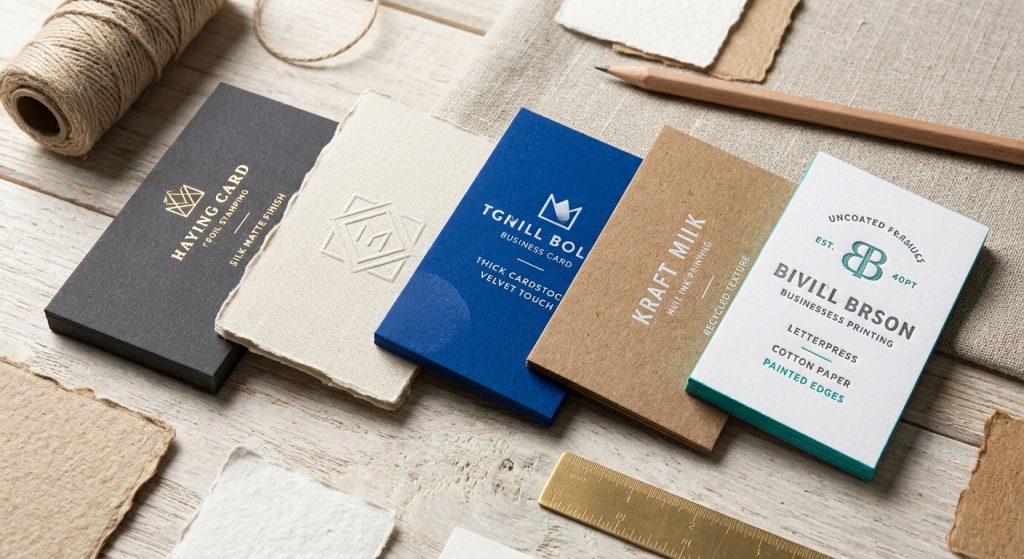
Second, consider how often clients handle the card. Cards that pass between hands frequently require heavy, sturdy paper.
Finally, balance your goals with your budget. Premium papers cost more initially, but they build lasting impressions and offer superior durability.
Best Business Card Design Paper Stocks
Selecting the best paper stock depends entirely on your unique brand identity. Here are the top choices for modern businesses:
| Paper Stock Type | Surface Finish | Best Used For | Key Advantage |
| Matte Card Stock | Smooth, non-shiny | Corporate, legal, consulting | Clean text, no glare |
| Glossy Card Stock | Shiny, vibrant | Photographers, retail, events | Rich colors, high visual contrast |
| Silk / Satin Stock | Soft, smooth satin touch | Premium corporate, luxury brands | Polished look, tear resistance |
| Uncoated Stock | Natural, textured feel | Eco brands, minimal designs | Easy to write on with pens |
| Textured Stock | Linen, felt, or laid | Boutique shops, artistic studios | Unique tactile presentation |
1. Matte Card Stock
Matte stock remains a top choice for modern visual projects. It offers a smooth surface without reflective glare.
This material makes small contact details easy to read. It gives your company a modern, subtle image.
Matte stock suits:
- Law firms and corporate offices
- Business consultants
- Service-based companies
- Minimalist brand styles
2. Glossy Card Stock
Glossy paper features a polished layer. It makes rich colors stand out with dramatic shine.
This paper stock works best when your artwork incorporates photographs or heavy graphics.
Glossy cards work well for:
- Creative agencies and studios
- Professional photographers
- Restaurants and hospitality brands
- Event planning companies
However, glossy surfaces show finger marks quickly. Select this option when bold imagery matters more than paper texture.
3. Silk or Satin Card Stock
Silk stock balances matte and glossy finishes seamlessly. Its surface feels extraordinarily smooth to the touch.
It offers vibrant color depth without excessive glare. Therefore, top corporate teams choose silk for high-end cards.
Silk stock suits both subtle and artistic layouts. It offers incredible versatility for any professional project.
4. Uncoated Card Stock
Uncoated paper provides a natural visual feel. It omits extra surface coatings entirely.
Uncoated stock works best for:
- Personal branding projects
- Eco-friendly companies
- Creative design studios
- Elegant minimalist brands
Furthermore, uncoated surfaces absorb ink smoothly. This allows you to write notes or appointment dates on the card easily.
5. Textured Card Stock
Textured paper introduces physical depth to your card. Popular patterns include linen, felt, and laid textures.
Subtle textures highlight luxury brand logos effectively. Stronger textures emphasize bold artistic typography. Use textured stocks when the physical material itself forms part of your brand identity.
How Thickness Enhances Business Card Design
Paper thickness changes how clients evaluate your brand quality. Light paper works for basic flyers, but heavy card stock feels substantial.
Standard (300 GSM)  ──► Good for mass promotional handouts
Premium (350-400 GSM) ──► Ideal for daily corporate networking
Ultra-Thick (600+ GSM) ──► Best for luxury executive branding
Medium-weight cards suit everyday networking needs. Heavy stock offers an executive experience.
However, extremely thick cards take up extra space in wallets. Choose paper weight carefully according to your specific marketing goals.
Selecting Colors for Business Card Design
White stock provides a bright background for logos and corporate text. Off-white and cream options deliver a softer visual presentation.
Black stock creates an intense, luxurious feel. Colored papers build strong brand identities, but they require careful print planning. Light paper handles standard inks easily. Dark paper requires white ink printing or foil stamping.
Finishing Options for Business Card Design
Finishing techniques upgrade standard paper into impressive promotional items.
- Lamination: Lamination adds protective layers against moisture. Soft-touch lamination delivers a velvet feel for corporate cards.
- Spot UV: Spot UV applies high-gloss coating to specific areas. It highlights logos without cluttering the layout.
- Foil Stamping: Foil creates metallic highlights in gold or silver. Foil stamping shines on dark paper backgrounds.
- Embossing and Debossing: Embossing raises elements, while debossing presses patterns into the paper stock. Both processes add distinct physical depth.
Matching Paper Stock with Brand Identity
Your card material must reflect your core values. A legal firm prefers smooth matte stock, while a fashion brand chooses textured paper with gold foil accents.
Consistency builds recognition across all marketing channels. Your business cards must match your letterheads, signage, packaging, and office items.
Business Card Design and Unified Office Materials
Your cards must match your broader corporate stationery seamlessly. When managing complete office packages, businesses often arrange professional Office Busines card printing alongside matching letterheads.
Maintaining consistent stock across all items builds brand trust. If you need quick material samples or print tests, visiting a reliable near me printing press helps you evaluate paper weights in person before placing orders.
Integrating Business Cards into Your Marketing System
Business cards represent one key piece of your complete promotional strategy.
┌─────────────────────────────────────────────────────────────┐
│                 UNIFIED BRANDING SYSTEM                      │
├──────────────────────────────┬──────────────────────────────┤
│      PRINT MARKETING         │      DISPLAY SOLUTIONS       │
├──────────────────────────────┼──────────────────────────────┤
│ • Business Cards             │ • Large Format Banners       │
│ • Corporate Letterheads      │ • 3D Display Models          │
│ • Folders & Stationery       │ • Exterior Architectural Sign│
└──────────────────────────────┴──────────────────────────────┘
When businesses launch local promotional campaigns, they often order a custom banner dubai style display alongside their corporate cards. Similarly, reaching out to a 3d printing service near me allows companies to create custom 3D displays and architectural models.
Combining print products with display solutions ensures your visual messaging stays strong across all customer touchpoints.
Common Mistakes in Business Card Design
Selecting paper stock solely based on price harms brand image. The cheapest option rarely reflects quality craftsmanship.
[Common Design Pitfall]  ──►  [Strategic Solution]
Selecting paper by low cost ──► Invest in durable, quality stock
Overusing foil & spot UV   ──► Keep accents simple & balanced
Choosing thin 200 GSM paper ──► Use 350+ GSM for executive cards
Overusing finishes creates messy results. Combining foil, spot UV, and heavy embossing together disrupts visual balance. Keep your final layout clean and functional.
Always check print proofs thoroughly. Verify that contact details are correct, small text stays readable, and logos have space to breathe.
About AL IZRA ADVERTISING GIFT TRADING L.L.C
At AL IZRA ADVERTISING GIFT TRADING L.L.C, we are committed to transforming your brand’s vision into captivating visuals. With a focus on quality craftsmanship, personalized service, and cutting-edge technology, we ensure that your signage not only stands out but also effectively communicates your brand identity. Trust AL IZRA to elevate your business with exceptional signage that makes a lasting impression.
For premium recognition items, bespoke awards, and branded gifts, businesses can also explore Crystal Palace as another top destination for corporate presentation needs.
Conclusion
The best paper stock for your business card design depends on your brand image, audience, and overall budget. Matte stock offers clean professionalism, while glossy paper delivers rich visual contrast. Silk stock provides refined luxury, while uncoated and textured options bring natural charm.
Carefully combining paper stock, thickness, and finishing turns a simple card into an effective branding tool. Partnering with print specialists across the UAE ensures your business cards, banners, and stationery present your company with total confidence.